
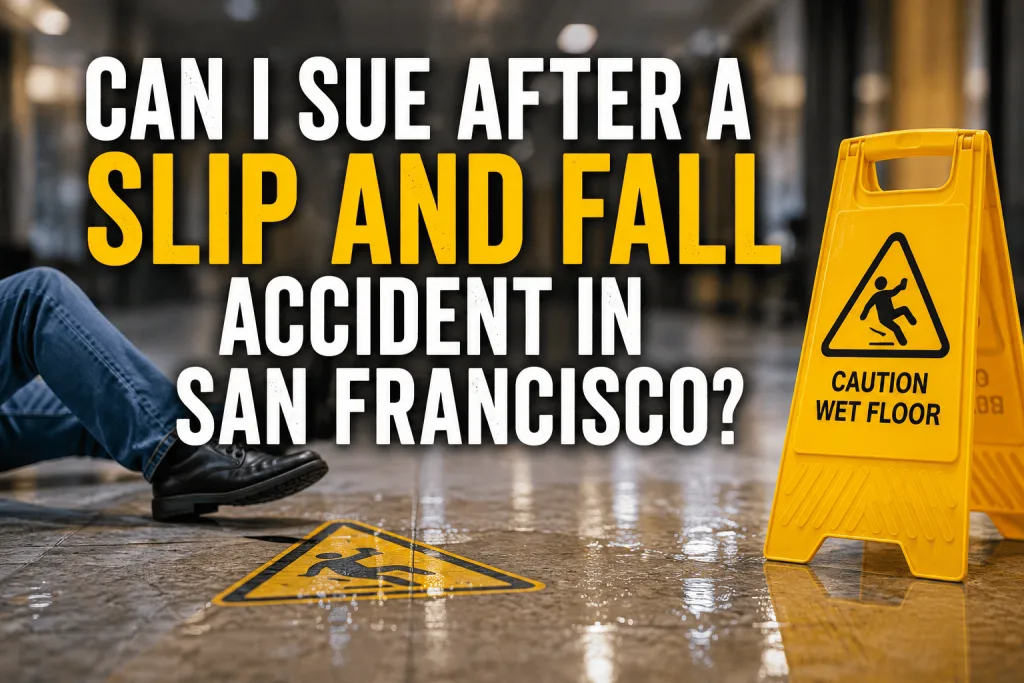
A slip and fall accident can happen almost anywhere—from a grocery store or restaurant to an apartment building, office, sidewalk, or parking lot. While some falls result in minor injuries, others can cause broken bones, head injuries, back problems, or other conditions that require significant medical treatment.
If you were injured after slipping or falling on someone else's property in San Francisco, you may be wondering: Can I sue for my injuries?
The answer depends on the circumstances of the accident, the condition that caused your fall, who controlled the property, and whether negligence contributed to your injuries.
What Is a Slip and Fall Claim?
A slip and fall injury usually involves premises liability, which is an area of law related to injuries that arise from hazardous conditions on property. According to the California Judicial Council, there are various factors to a premises liability lawsuit, some of which include ownership or control over the property, the negligence of the property owner, that an injury occurred, and that the negligence caused the injury.
Examples of potential hazards include:
- Slippery floors
- Uneven sidewalks
- Damaged floors
- Improperly maintained stairways
- Insufficient lighting
- Walkway obstacles
- Hazards in the parking lot
- Various other hazards
It must be noted, however, that merely falling on another person's property is not sufficient evidence of liability. The circumstances of the accident must be examined.
When Can You Sue After a Slip and Fall?
You might have a case against another party whose negligent behavior led to a dangerous situation where you sustained an injury.
To illustrate, say you trip and fall in a San Francisco business because of a wet floor. If the hazard existed and the property owner was aware or could have found out about it, then such data could be crucial in your lawsuit.
It is useful to present evidence such as pictures of the hazard, witnesses, reports, documents, and medical records.
What Should You Do After a Slip and Fall?
In the event that you are hurt as the result of a slip and fall accident, there are some things you might consider doing right away to preserve evidence.
Seek Medical Attention
Your health needs to be a priority. There could be injuries that aren't immediately apparent after a fall. Be sure to follow the advice of your doctor and preserve any documentation from your care.
Document the Scene
If you can do so, take pictures or video footage of whatever conditions led to your fall, as well as the area around it.
Report the Accident
Let the owner, manager, company, or other relevant parties know about the accident. Inquire whether an accident report will be written and, if so, get a copy for yourself.
Collect Witness Information
If there are witnesses who saw what happened or witnessed the conditions that caused your fall, try to collect contact information.
Keep Records
Keep any medical expenses, bills, payroll records, insurance communication, and pictures of the accident.
What Compensation May Be Available?
The kinds of damages that might be sought in a personal injury lawsuit depend on the details of the case and the injuries suffered by the injured party.
It is hard to generalize about the types of damages that will be pursued since each case can vary widely. An attorney can assess the unique aspects of your situation.
What If the Property Owner Says the Accident Was Your Fault?
The accused property owner or their insurance company can assert that the injured party was at fault for the accident. The state of California recognizes comparative fault and the state of California has civil jury instructions on the topic of comparative fault in premises-liability cases.
This means that the specific circumstances of your accident may become a relevant factor. Matters such as the activities of the injured party, visibility of the hazard, and awareness of the property owner will be pertinent considerations.
How Long Do You Have to File a Slip and Fall Lawsuit in California?
For many personal injury cases, California has a two-year period from the date of the accident to bring a case against the defendant. According to California Courts, the law sets the statute of limitations for personal injury at two years.
But there are other laws that may apply depending on the type of your case. Injuries caused by a governmental agency have significantly less time to be filed with other filing requirements. According to California Courts, a person must file his/her claim with a governmental agency within six months from the injury, with more deadlines after the response from the agency.
Therefore, it is essential to get legal assistance right after you get injured to know how much time you have.
Should You Talk to a San Francisco Personal Injury Lawyer?
You should consider consulting a personal injury lawyer if you have suffered serious injuries, your treatment has not yet finished, there is a dispute about the responsibility for the accident between the property owner or an insurance company, or you cannot identify who could be at fault for your fall.
The attorney will be able to analyze the situation, determine the possible liable parties, assess the relevant evidence, and provide you with possible courses of action.
It is not necessarily required to wait until you fully comprehend the scale of your claim before meeting with an attorney.
Conclusion
A slip and fall accident can result in significant physical, financial, and emotional challenges. Whether you can sue after a fall in San Francisco depends on the circumstances, including the condition that caused the accident, who controlled the property, whether negligence was involved, and the extent of your injuries.
If you or a loved one has been injured in a slip and fall accident, The Sulfab Law Office is a San Francisco law firm representing clients in personal injury, immigration, and intellectual property matters. As a leading slip and fall lawyer serving San Francisco, our experienced legal team can help injured individuals understand their legal options, identify the liable parties, and pursue appropriate action when another party's negligence may have contributed to their injuries. Contact The Sulfab Law Office today for a confidential consultation to discuss your case.
Disclaimer: The information on this website and blog is for general informational purposes only and is not professional advice. We make no guarantees of accuracy or completeness. We disclaim all liability for errors, omissions, or reliance on this content. Always consult a qualified professional for specific guidance.