
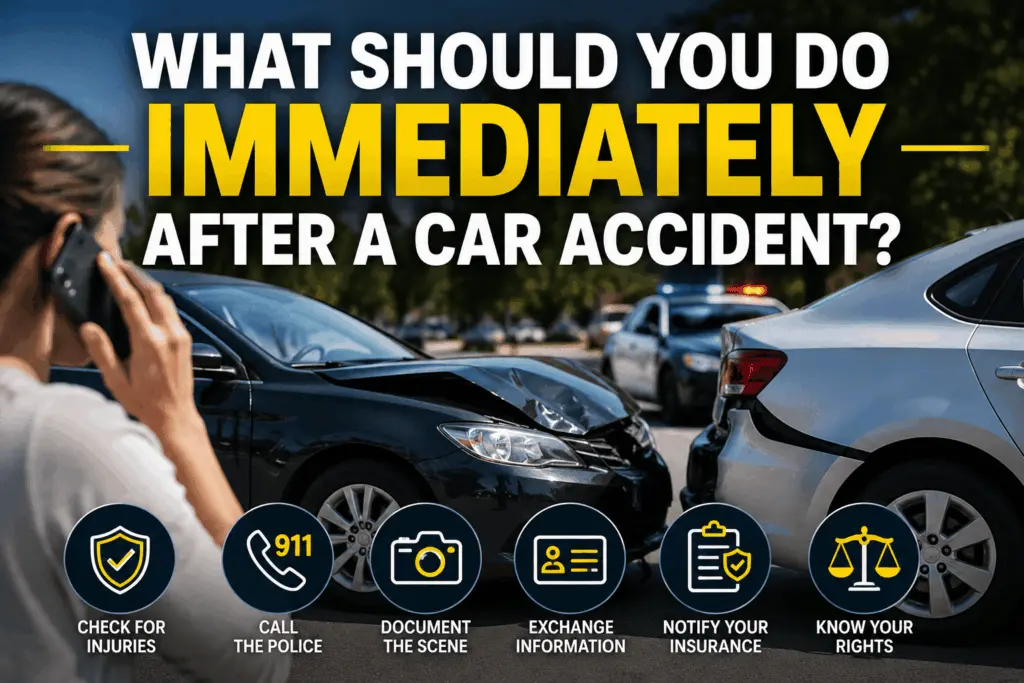
Being involved in a hit-and-run accident can be stressful and confusing. One moment you are driving normally, and the next, another driver has collided with your vehicle and left the scene. You may be dealing with injuries, vehicle damage, medical expenses, and uncertainty about how to identify the person responsible.
Knowing what to do immediately after a hit-and-run accident in California can help protect your health, preserve important evidence, and support a potential insurance claim or personal injury case.
1. Get to a Safe Location
Your safety is the first priority.
If your car can be moved without posing additional risk, move it out of the path of traffic, turn on hazard lights, and stay in a safe location. If anyone is injured, call 911 immediately. According to California DMV guidance, you should dial 911 if someone is hurt in a crash.
Never chase the driver who fled — pursuing them may cause another collision and put you and others at greater risk.
2. Call the Police
Report the hit-and-run to law enforcement as soon as possible.
Provide as much information as you can, including:
- The location of the accident
- Approximate time of the collision
- Direction the other vehicle was traveling
- Vehicle make, model, and color
- License plate number — even a partial plate helps
- Description of the driver
- Description of the damage
- Any identifying features of the vehicle
According to the California Department of Insurance, you should contact police after an accident, and hit-and-run accidents may be covered under certain policy provisions.
3. Get Medical Attention
Even if you feel fine at first, consider seeing a doctor after a significant crash. Some injuries do not present symptoms immediately, and medical documentation will be important if you need to claim damages.
Keep copies of:
- Medical records
- Bills
- Prescriptions
- Treatment recommendations
- Follow-up appointments
- Documentation of missed work
If you experience pain, dizziness, or headaches after the crash, seek medical care promptly.
4. Document the Accident Scene
Evidence is especially important in hit-and-run cases because the at-fault driver may not be immediately identifiable.
If it is safe to do so, photograph:
- Damage to your vehicle
- The surrounding roadway
- Skid marks or debris
- Traffic signs and signals
- Nearby businesses or buildings
- Your vehicle's position
- Any vehicle parts left behind
The California Department of Insurance advises motorists to photograph vehicle damage and the accident site. Also collect contact information from any witnesses who saw the collision.
5. Look for Surveillance or Other Evidence
Dashcams, nearby businesses, homes, traffic cameras, and parking lot cameras may have recorded the collision.
If you notice security cameras near the scene, inform the police. Note the names and locations of businesses that might have footage. Preserve dashcam video immediately so it is not overwritten. Even a partial license plate can be valuable to investigators.
6. Notify Your Insurance Company
Notify your insurer immediately. Your policy coverage may be relevant to a hit-and-run, including uninsured motorist coverage, uninsured motorist property damage coverage, collision coverage, and medical payments coverage. According to the California Department of Insurance, uninsured motorist coverage may apply when the at-fault driver is uninsured, and uninsured motorist property damage coverage may apply when the uninsured driver is identified.
7. File the Required DMV Report
California has specific accident-reporting requirements. The DMV requires a Report of Traffic Accident Occurring in California (SR-1) to be submitted within 10 days if the accident involved injury, death, or property damage exceeding $1,000. This is in addition to any police or insurer reports. Failure to comply can affect your driving privilege.
8. Keep All Accident-Related Documents
Keep all documentation in one folder, including:
- Police report information
- Insurance correspondence
- Medical records and bills
- Vehicle repair estimates
- Photographs and videos
- Witness information
- Lost-wage documentation
- Tow bills and rental-car records
- Notes about injuries and recovery
Organized records make it easier to evaluate a claim and respond to insurer requests.
9. Be Careful When Speaking With Insurance Companies
After a hit-and-run, the insurer will investigate and may ask for a statement. Be honest and provide accurate information, but avoid speculating about facts you do not know. Do not minimize or exaggerate symptoms.
The California Department of Insurance recommends contacting your insurer promptly and cooperating with the claims investigation. If you suffered serious injuries or are having difficulty with the insurer, consider consulting a personal injury attorney.
10. Speak With a San Francisco Personal Injury Attorney
Hit-and-run cases can be harder to resolve than typical collisions. A lawyer can evaluate the facts, identify potential insurance options or other legal avenues, and advise you on next steps — particularly if you face significant medical costs or financial impact. The options available depend on the specific circumstances of your case.
Conclusion
A hit-and-run accident in California can leave you dealing with injuries, vehicle damage, insurance issues, and uncertainty about who was responsible. Your first priorities should be getting to safety, obtaining medical attention when needed, reporting the accident to law enforcement, documenting the scene, preserving evidence, notifying your insurer, and completing any required DMV reporting.
If you or a loved one has been injured in a hit-and-run accident, The Sulfab Law Office can help you understand your options. As a leading San Francisco personal injury law firm also serving immigration and intellectual property clients, we help injured individuals explore compensation for medical bills, lost wages, and related losses. Contact us today for a confidential consultation.
Disclaimer: The information on this website and blog is for general informational purposes only and is not professional advice. We make no guarantees of accuracy or completeness. We disclaim all liability for errors, omissions, or reliance on this content. Always consult a qualified professional for specific guidance.